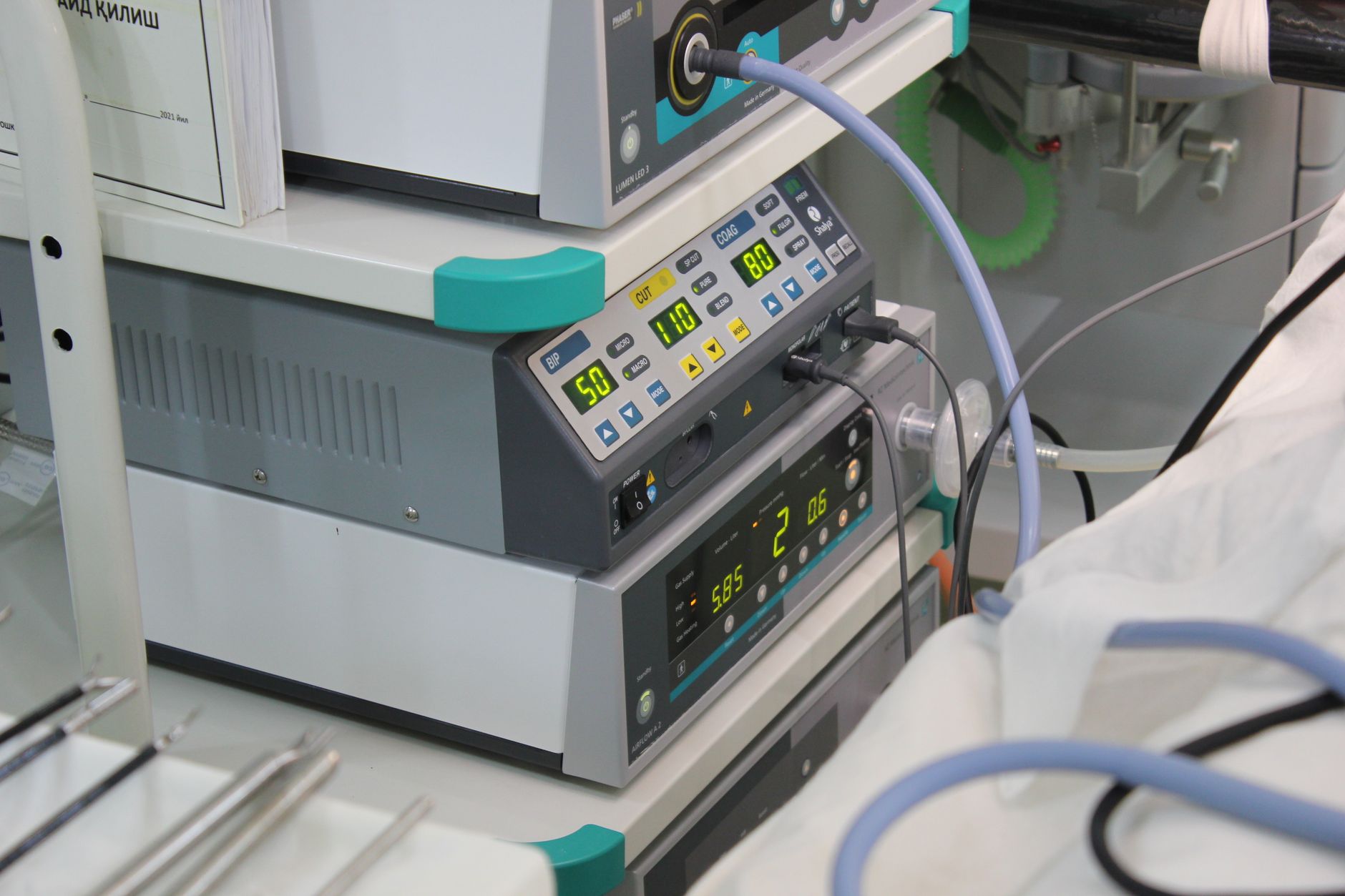
The Clinical Legacy Problem: Why EOL Systems Persist in Healthcare
Healthcare organizations operate in a unique technology landscape where end-of-life clinical systems remain operational far longer than in other industries. A 2024 HIMSS survey found that 73% of surveyed health systems continue running at least one application on unsupported operating systems. This isn't recklessness—it's clinical necessity. Mission-critical applications like picture archiving and communication systems (PACS), electronic health record legacy modules, laboratory information systems (LIS), and specialized diagnostic devices often lack viable replacement options, carry prohibitive costs to migrate, or require FDA recertification processes that span years. Simultaneously, vendors cease security patches, leaving these systems exponentially vulnerable to exploitation.
The challenge is that traditional security strategies—patch management, vulnerability scanning, network segmentation—become incomplete when vendors no longer release updates. This is where NIST Special Publication 800-167, Guide to Application Whitelisting and Blacklisting in the Enterprise, offers a practical compensating control framework. Application allowlisting (now the preferred terminology over "whitelisting") operates on a principle of zero trust for unauthorized code: only pre-approved applications execute; everything else is denied by default.
Understanding NIST SP 800-167 in the Clinical Context
NIST SP 800-167 categorizes allowlisting approaches across three deployment models: hash-based (cryptographic fingerprints of executable files), path-based (location restrictions), and behavior-based (monitoring runtime conduct). For end-of-life clinical systems, hash-based allowlisting is most applicable because it provides the highest assurance without requiring continuous rule maintenance across legacy software stacks that organizations may not fully understand.
The standard emphasizes a critical prerequisite: comprehensive application discovery and inventory. Before enforcing allowlisting on a legacy PACS server or laboratory analyzer running Windows XP Embedded, your team must document every legitimate executable, DLL, script, and service running on that system. This inventory becomes your allowlist baseline. NIST SP 800-167 recommends a three-phase implementation: discovery (weeks 1-4), testing (weeks 5-8), and enforcement (weeks 9+). In healthcare practice, this timeline should expand; clinical downtime is unacceptable, and testing must account for seasonal patient volume fluctuations and seasonal security events.
HITRUST CSF 06.08, which maps to HIPAA Security Rule 164.312(a)(2)(i) (access controls), explicitly endorses application control mechanisms. By implementing allowlisting on EOL systems per NIST SP 800-167, you simultaneously address HIPAA requirements, reduce HITRUST examination findings, and align with CIS Controls 2.4 (address unauthorized software), demonstrating defensible security posture to auditors and cyber insurers.
Practical Implementation: Five Critical Steps
1. Classify Systems by Risk and Clinical Impact
Not all EOL systems warrant equal investment. Use risk quantification frameworks—FAIR (Factor Analysis of Information Risk) or NIST RMF—to prioritize. A legacy PACS system housing years of diagnostic imaging represents higher value target than a retired nursing documentation workstation. Create a heat map: assess each EOL system across likelihood of compromise, potential impact to patient safety, and data sensitivity. Allowlist implementation should prioritize high-risk, high-impact systems first.
2. Document Baseline Application Inventory
Deploy application discovery tools (Rapid7 Insight, Qualys, or CrowdStrike Falcon) to enumerate all processes, services, scheduled tasks, and libraries. Export this data to a spreadsheet and classify each entry: essential (required for clinical function), supportive (system or security services), and suspicious (unknown or unnecessary). This inventory becomes your source-of-truth allowlist. For systems predating modern discovery tools, conduct manual forensics using Autoruns, Process Explorer, and registry audits. This step typically consumes 20-30% of implementation effort but is non-negotiable.
3. Select Allowlisting Technology Appropriate to Clinical Environment
Evaluate solutions that integrate with existing endpoint protection platforms (Microsoft Defender Application Control, CrowdStrike Falcon Prevention, Carbon Black CB Protect). For highly isolated legacy systems, consider stateless allowlisting: a read-only allowlist stored on a separate system that the clinical device polls at startup and cannot modify. This approach minimizes disruption risk. Avoid solutions requiring frequent agent updates on EOL systems; they generate compliance debt. Test allowlisting in audit mode (logging violations without blocking) for at least 4-6 weeks before enforcement activation.
4. Establish Exception and Change Management Processes
EOL systems still require patches and updates—just not from the primary vendor. When clinical teams request new functionality or the security team identifies necessary updates, who approves deviations from the allowlist? Document this process in writing. Include: requestor, business justification, security review (hash verification and origin authentication), clinical validation, change advisory board sign-off, and rollback procedures. Tie this to HIPAA Security Rule 164.308(a)(3)(ii)(A) (authorization and accountability). Track all exceptions in your risk register; they represent potential attack vectors.
5. Monitor, Log, and Respond to Violations
Allowlisting generates substantial log volume. Implement centralized log aggregation (Splunk, ArcSight, or cloud-native SIEM) to collect allowlist violations from clinical systems. Alert on repeat violations from the same user or process—these suggest lateral movement or privilege escalation attempts. Create response playbooks: How quickly must the SOC investigate a violation? Who investigates clinical system anomalies—your security team or clinical engineering? Define this upfront to avoid delays when an incident occurs. NIST Cybersecurity Framework function "Detect" (DE.AE-1) explicitly requires real-time alerting on anomalous activity.
Integration with Broader Healthcare Cybersecurity Strategy
Allowlisting alone is insufficient. Combine it with network segmentation (isolate clinical systems on VLAN with restricted egress), network access control (802.1X or similar), and continuous monitoring. NIST CSF's integration with HIPAA and HITRUST ensures your allowlisting program addresses regulatory requirements while protecting patient safety. Document allowlisting policies in your information security program and clinical system governance. Include clinical staff—radiologists and lab directors understand better than security teams which applications are legitimately required; involve them in discovery and exception decisions.
Measuring Success and Governance
Establish key performance indicators: percentage of EOL systems under allowlisting control, mean time to allowlist exception approval, number of blocked execution events per system per month, and percentage of violations investigated within SLA. Report these to your governance committee quarterly. FAIR methodology can quantify the risk reduction: calculate annualized loss expectancy before allowlisting (vulnerability exploitability × compromise likelihood × average healthcare breach cost of $10.93M per 2024 HIPAA figures), then measure post-allowlisting reduction. This business case justifies continued investment and resource allocation.